Systems guide
Minecraft Dungeons 2 Gameplay
The sequel keeps action-RPG combat but substantially changes exploration and buildcraft: the world is interconnected, armor is split across four slots, talismans add passive specialization, enchantment books are collected separately, and jump attacks add vertical combat and traversal.
- Genre
- Action RPG
- Co-op
- Up to 4 players
- World
- Large interconnected regions
- Armor
- Helmet, chestplate, leggings, boots
- New gear
- Talismans
- New traversal
- Jumping and jump attacks
Official gameplay video
Official screenshots


Interconnected exploration
Developer gameplay explicitly contrasts the sequel with selecting isolated missions from a table. The world contains connected regions, side-quest markers and entrances to procedurally generated dungeons.
Expanded gear system
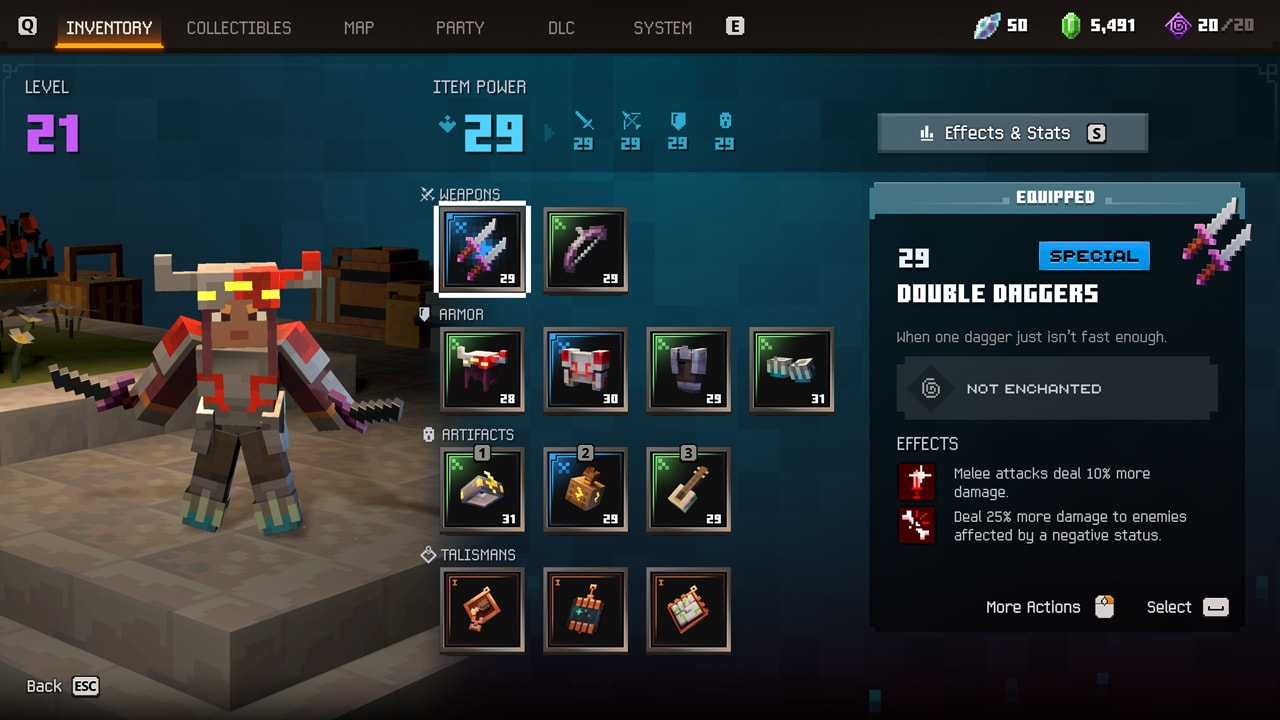
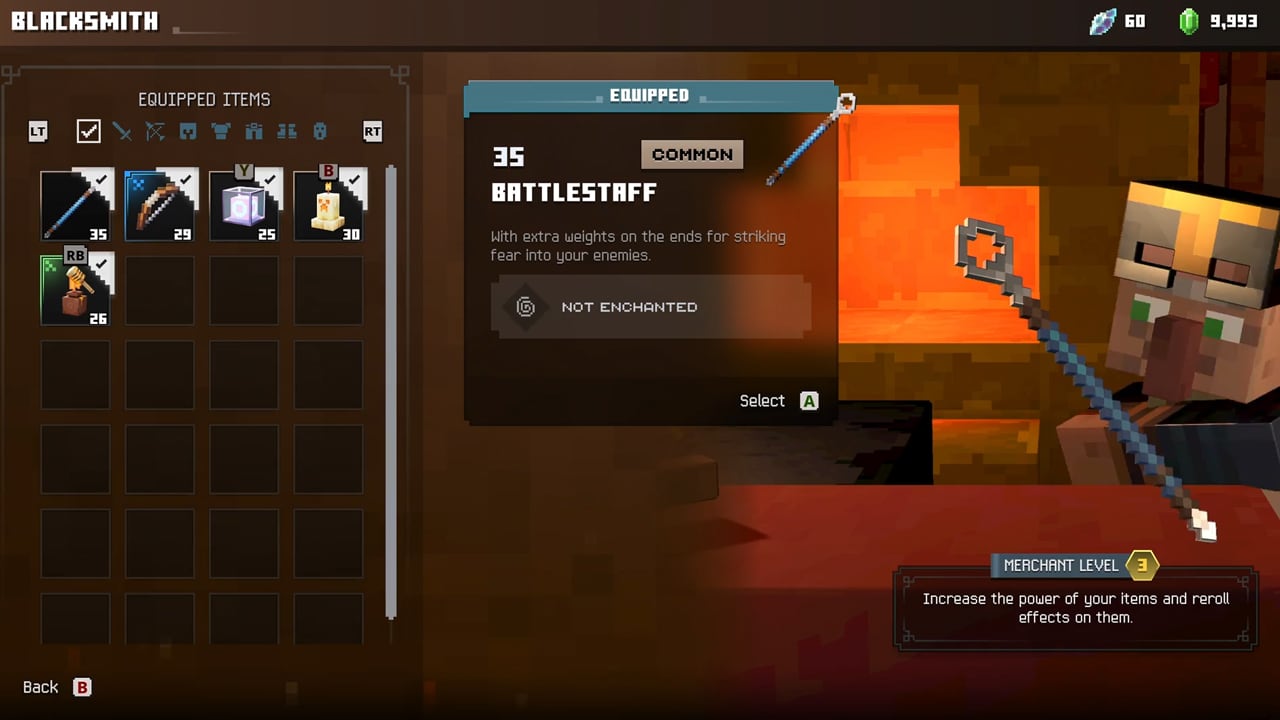
Armor is no longer a single slot: helmet, chestplate, leggings and boots are equipped separately. Talismans provide passive bonuses; some can gain experience and become stronger.
Enchantments are collected as books
Enchantments are described as books found in the world, then repeatedly applied to suitable gear. Inner Mines is one confirmed example: weapon attacks deploy two mines that explode when enemies approach.
Jumping changes combat and secrets
Jumping is new to the sequel and supports jump attacks as well as traversal into spaces that would have been inaccessible in the first game.
Co-op quality-of-life
The Mini Inventory lets players change gear without forcing the whole couch group into a turn-taking inventory flow. In the demonstrated controller layout it opens with D-pad Up, and multiple players reviving together speed up the revive.