Multiplayer
Minecraft Dungeons 2 Crossplay & Multiplayer
Yes. Mojang’s official co-op deep dive confirms crossplay, mixed couch-and-online co-op, party codes, online hero data, matchmaking and dedicated servers. This page keeps crossplay and cross-platform progression separate because they solve different problems.
- Max party size
- 4 players
- Crossplay
- Officially confirmed
- Couch co-op
- Online and offline
- Mixed local + online
- Confirmed
- Party code
- 8 letters / numbers
- Online hosting
- Dedicated servers
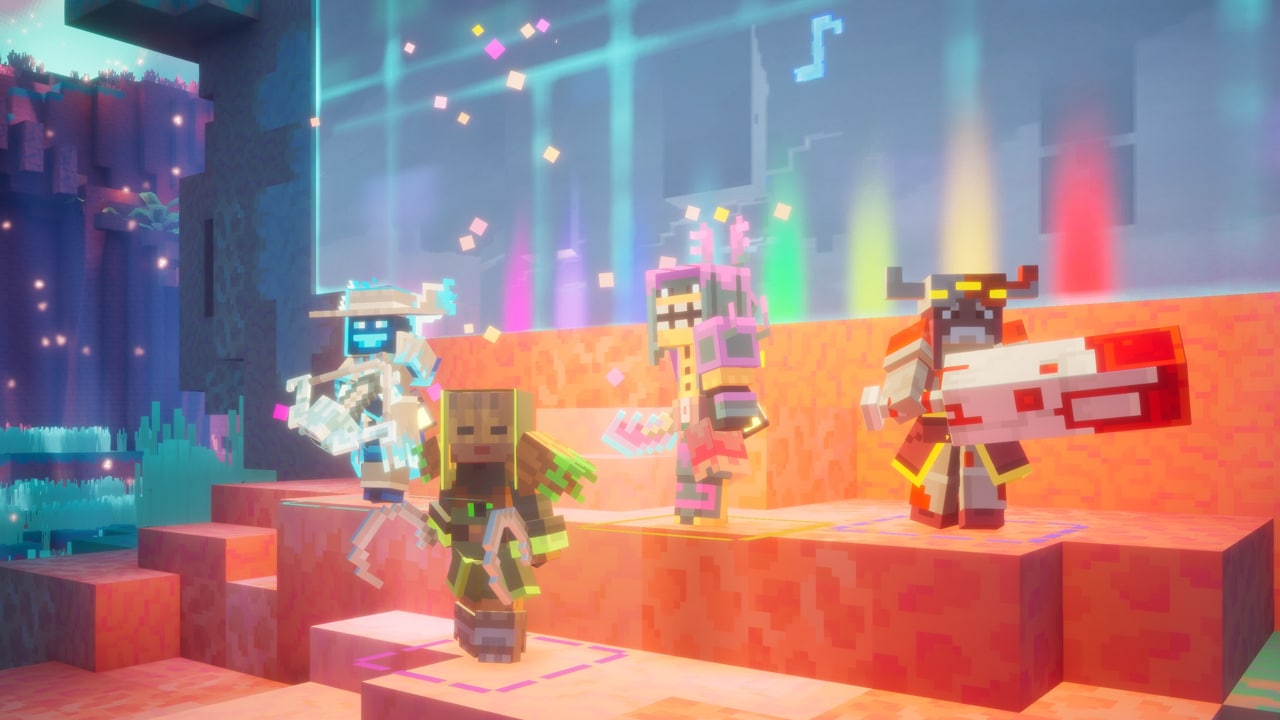
Official co-op visual
Is Minecraft Dungeons 2 cross-platform?
Mojang describes Dungeons II around a one-click crossplay goal so friends can play together even when they are on another platform.
The newer first-party co-op article is stronger evidence than the launch-week store-only wording this page previously relied on: Mojang explicitly describes playing with friends on another platform and says party codes work regardless of platform.
Can couch and online players mix?
Couch co-op sessions can go online so remote players can join open slots in the same four-player party.
Couch co-op therefore does not force the whole party to remain local. A local group can take the session online and fill remaining slots remotely.
Crossplay vs cross-platform hero progression
Crossplay is about playing together across devices. Cross-platform progression is about carrying your hero with you. Hero data is stored online. Linking platform accounts to the same Microsoft account lets players continue with the same hero on another supported platform.
Mojang also says that, where the platform supports it, a player can sign into their own platform account on a friend’s device and continue with their own hero.
Party Codes
A party code is an eight-character letters-and-numbers code for the current party. Friends can use it to join through the lobby or an ongoing game regardless of platform.
This is separate from the in-game friends list and is designed as a direct way to join the current party even after play has already started.
How matchmaking works
Matchmaking considers core quest progress, region, and power level, and can place a player into a session already in progress.
Matchmaking can be used when friends are unavailable or simply to fill remaining party slots.
Dedicated servers
Dungeons II moved online sessions from party-leader hosting to dedicated servers and selects a server for the party using each player’s ping.
That is a direct change from the first Minecraft Dungeons, where the party leader hosted the online session.
Co-op inventory and revives
The Mini Inventory lets multiple players manage equipment without taking turns in a single full inventory. Multiple teammates reviving the same downed player also speed up the revive.